
Introduction
A seaside picnic sounds simple: good food, a quiet view, and time to relax near the water. But in practice, many people bring too much. They pack heavy coolers, extra blankets, too many dishes, and several bags of items they never use. By the time they reach the beach or coastal park, the picnic already feels like work.
A comfortable seaside picnic depends on balance. You need enough to enjoy the meal and stay comfortable, but not so much that the setup becomes difficult to carry, arrange, and clean up. The best picnic feels easy from start to finish.
Choose a Simple Picnic Style First
Before packing, decide what kind of picnic you want. Is it a casual snack break after a beach walk? A quiet lunch for two? A family meal with kids? A sunset picnic with drinks and light bites? Each version needs a different setup.
Many people overpack because they do not define the picnic clearly. They bring items for every possible situation instead of the one they are actually planning. A clear plan helps you choose better.
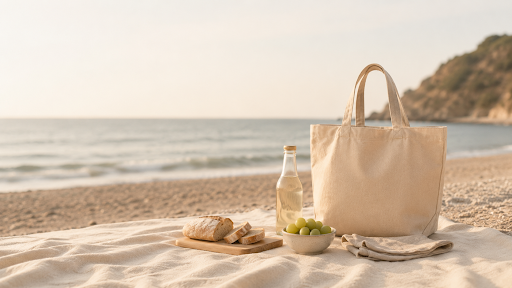
For a relaxed seaside picnic, the essentials might include a lightweight blanket, easy food, drinks, napkins, sunscreen, and one practical carry bag. Simple options such as Custom Tote Bags can help keep picnic items together without making the setup feel bulky.
Pick Food That Travels Well
Food is usually the heaviest part of a picnic, so choose carefully. The best seaside picnic foods are easy to carry, easy to eat, and not too sensitive to heat. Sandwiches, fruit, crackers, cheese, wraps, nuts, and simple salads work well.
Avoid foods that require too many containers, utensils, or serving steps. A picnic should not feel like moving a kitchen outdoors. If something needs multiple tools to prepare or serve, it may not be worth bringing.
Drinks should also be simple. A reusable water bottle and one additional drink option are often enough. If you bring a cooler, keep it small unless you are feeding a large group.
Use One Main Bag and Smaller Organizers
Overpacking often happens when people use too many bags. One bag holds food, another holds towels, another holds plates, and soon the picnic becomes hard to manage. A better method is to use one main bag and a few small organizers inside it.
A pouch can hold napkins and utensils. A container can hold snacks. A separate small bag can hold sunscreen and personal items. This keeps everything visible and easier to repack later.
If you are unsure what kind of bag works best for seaside settings, a Beach Tote Bag Guide can help you think through structure, fabric, and size for outdoor use.
Bring Comfort Without Bringing Too Much
Comfort matters, but it does not require packing half the house. A lightweight blanket or mat is usually enough for seating. If the ground is damp or sandy, choose something easy to shake out. A small towel can double as a cushion, cover-up, or cleanup cloth.
Shade is important if you will stay for more than an hour during the day. Depending on the location, this might mean choosing a picnic spot near natural shade instead of carrying large equipment. A hat and sunglasses can also make a big difference without taking much space.
Make Cleanup Part of the Plan
A good picnic ends cleanly. Bring a small bag for waste, even if you expect trash bins nearby. Coastal areas can be windy, and lightweight wrappers or napkins can blow away quickly.
Pack food in reusable containers when possible. They protect the food on the way there and make it easy to carry leftovers home. Before leaving, check the area carefully for small items like bottle caps, napkins, or food scraps.
Conclusion
Planning a comfortable seaside picnic is not about bringing everything. It is about bringing the right things. When food is simple, the bag is organized, and comfort items are chosen carefully, the picnic feels relaxed instead of heavy.
The best seaside picnic lets you focus on the view, the company, and the slow pace of the coast. With a lighter setup and a little planning, you can enjoy the experience without carrying more than you need.
 admin