
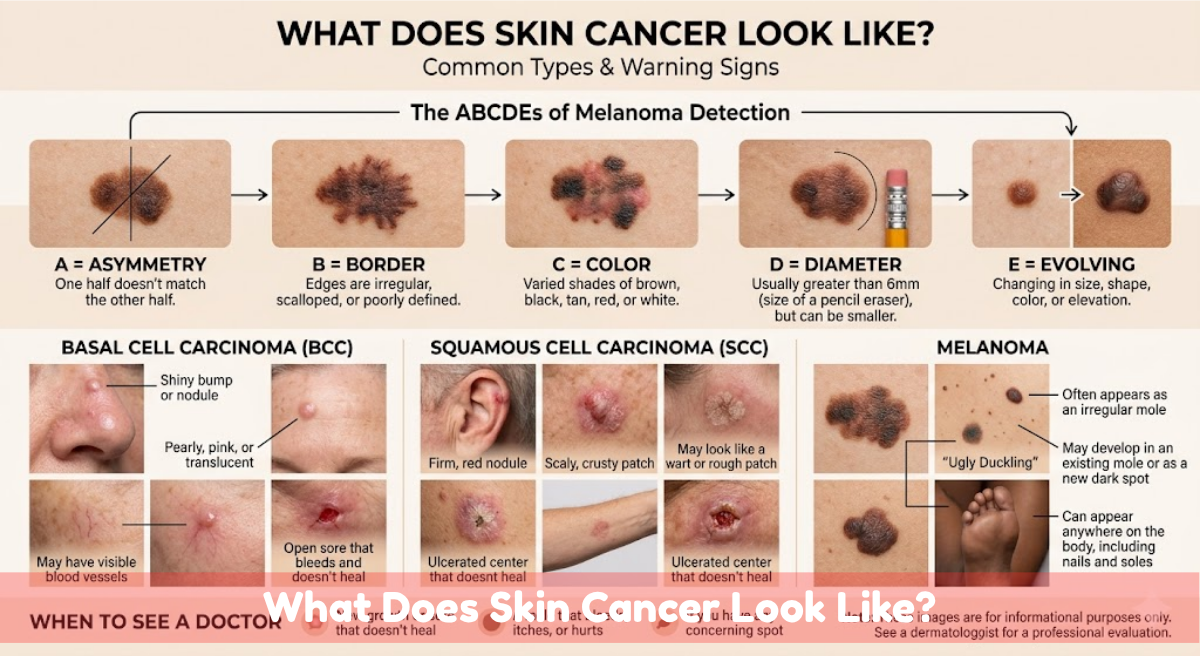
Skin cancer is one of the most common types of cancer worldwide. It develops when abnormal skin cells grow uncontrollably, often due to damage from ultraviolet (UV) radiation from the sun or tanning beds. Because the skin is visible, skin cancer can sometimes be detected early if you know what signs to look for. Many people wonder: what does skin cancer look like? Recognizing the early warning signs can help you seek medical care quickly and potentially save your life.
This article explains the appearance of skin cancer, common symptoms, different types of skin cancer, and when to see a doctor.
Understanding Skin Cancer
Skin cancer occurs when skin cells begin to grow abnormally and form tumors. These abnormal cells usually appear in areas frequently exposed to sunlight, such as the face, neck, arms, hands, and legs. However, skin cancer can also develop in areas that rarely see sunlight.
There are three main types of skin cancer:
- Basal cell carcinoma
- Squamous cell carcinoma
- Melanoma
Each type has a different appearance and level of severity. Knowing how these cancers typically look can help you identify suspicious changes in your skin.
What Does Skin Cancer Look Like in Early Stages?
In the early stages, skin cancer may appear as a small, unusual spot or mark on the skin. It might resemble a mole, scar, sore, or patch that does not heal properly.
Common early signs include:
- A new growth or bump on the skin
- A sore that does not heal after several weeks
- A mole that changes in shape, color, or size
- A patch of skin that becomes scaly or rough
- A shiny or pearly bump
Because these symptoms can sometimes resemble harmless skin conditions, it is important to monitor any unusual changes carefully.
Basal Cell Carcinoma Appearance
Basal cell carcinoma is the most common form of skin cancer. It grows slowly and rarely spreads to other parts of the body, but it can still cause damage if left untreated.
Basal cell carcinoma often appears as:
- A pearly or shiny bump, often pink, red, or white
- A flat, flesh-colored or brown scar-like patch
- A bleeding or scabbing sore that heals and returns
- A translucent bump with visible blood vessels
This type of skin cancer is most commonly found on areas exposed to the sun, such as the face, ears, scalp, shoulders, and neck.
Squamous Cell Carcinoma Appearance
Squamous cell carcinoma is the second most common type of skin cancer. It can grow deeper into the skin and spread if not treated early.
Squamous cell carcinoma may look like:
- A firm, red bump
- A rough or scaly patch on the skin
- A sore with a crust or scab that may bleed
- A wart-like growth
These lesions are commonly found on sun-exposed areas like the face, lips, ears, hands, and arms.
What Does Melanoma Look Like?
Melanoma is the most dangerous form of skin cancer because it can spread quickly to other parts of the body. It often develops in existing moles or appears as a new dark spot on the skin.
Melanoma can look like:
- A mole that changes in color, shape, or size
- A dark or black spot with uneven borders
- A lesion with multiple colors, including brown, black, red, or blue
- A large spot that continues to grow
Melanoma may appear anywhere on the body, including areas not usually exposed to sunlight.
The ABCDE Rule for Detecting Melanoma
Doctors often recommend using the ABCDE rule to check moles and skin spots for signs of melanoma.
A – Asymmetry
One half of the mole does not match the other half.
B – Border
Edges are irregular, ragged, or blurred.
C – Color
The mole has multiple colors or uneven color distribution.
D – Diameter
The spot is larger than about 6 millimeters (roughly the size of a pencil eraser).
E – Evolving
The mole changes in size, shape, color, or begins to itch or bleed.
If a mole shows any of these warning signs, it should be examined by a healthcare professional.
Other Possible Signs of Skin Cancer
Skin cancer does not always appear as a dark mole. Some signs are more subtle and may include:
- Persistent itching or tenderness in a skin spot
- A rough patch that becomes thick or crusty
- A sore that repeatedly opens and bleeds
- A pink growth with raised edges
- A shiny scar-like area
Because skin cancer can appear in many different forms, any unusual or persistent skin change should be evaluated.
Where Skin Cancer Usually Appears
Skin cancer commonly develops in areas exposed to sunlight. These areas include:
- Face
- Neck
- Ears
- Scalp
- Shoulders
- Arms
- Hands
However, melanoma can also develop in places that receive little sun exposure, such as:
- Soles of the feet
- Palms of the hands
- Under the nails
- Genital areas
This is why it is important to examine your entire body when checking your skin.
Risk Factors for Skin Cancer
Several factors increase the likelihood of developing skin cancer. These include:
- Excessive sun exposure
- Frequent use of tanning beds
- Fair skin that burns easily
- A history of severe sunburns
- Having many moles
- A family history of skin cancer
- Weakened immune system
- Older age
Even people without these risk factors can still develop skin cancer, which is why regular skin checks are important.
How to Check Your Skin at Home
Regular self-examinations can help detect skin cancer early. Dermatologists recommend checking your skin once a month.
Follow these steps:
- Stand in front of a mirror in a well-lit room.
- Check your face, neck, chest, and stomach.
- Examine your arms, hands, and underarms.
- Use a mirror to check your back and shoulders.
- Look at your legs, feet, soles, and between toes.
- Check your scalp using a comb or hairdryer.
Take note of any new spots or changes in existing moles.
When to See a Doctor
You should see a doctor or dermatologist if you notice:
- A mole that changes quickly
- A sore that does not heal within several weeks
- A spot that bleeds, crusts, or grows
- A new growth that looks unusual
- Any skin change that worries you
Early diagnosis greatly increases the chances of successful treatment.
Treatment Options for Skin Cancer
Treatment depends on the type, size, and location of the cancer. Common treatment options include:
- Surgical removal of the tumor
- Cryotherapy (freezing the cancer cells)
- Radiation therapy
- Topical medications
- Immunotherapy
- Chemotherapy in advanced cases
Most skin cancers can be treated successfully when detected early.
How to Reduce Your Risk
Preventing skin cancer involves protecting your skin from harmful UV radiation.
Helpful prevention tips include:
- Use sunscreen with SPF 30 or higher
- Wear protective clothing, hats, and sunglasses
- Avoid tanning beds
- Stay in the shade during peak sunlight hours
- Reapply sunscreen every two hours outdoors
These habits can significantly reduce the risk of skin damage and cancer.
FAQs
What does skin cancer usually look like?
Skin cancer often appears as a new growth, a sore that does not heal, a scaly patch, or a mole that changes in size, shape, or color. The appearance varies depending on the type of skin cancer.
Can skin cancer look like a normal mole?
Yes. Some melanomas start as normal-looking moles but gradually change in size, shape, or color. This is why monitoring moles for changes is important.
Is skin cancer always dark or black?
No. Skin cancer can be pink, red, white, flesh-colored, or brown. Some forms, like basal cell carcinoma, may appear shiny or pearly rather than dark.
How fast does skin cancer grow?
Growth speed varies. Basal cell carcinoma grows slowly, while melanoma can grow and spread quickly if not treated.
Can skin cancer appear suddenly?
Yes. Some skin cancers develop as new spots or growths that were not present before. Any sudden or unusual skin change should be checked by a doctor.
Conclusion
Understanding what skin cancer looks like can help you identify warning signs early and seek treatment before the disease progresses. Skin cancer may appear as a changing mole, a persistent sore, a shiny bump, or a rough patch of skin. Because these signs can vary widely, regular skin checks and awareness of unusual changes are essential.
If you notice any suspicious spots, do not ignore them. Consulting a healthcare professional promptly can lead to early diagnosis and successful treatment. Protecting your skin from excessive sun exposure and practicing routine skin examinations are simple yet powerful ways to safeguard your health.