
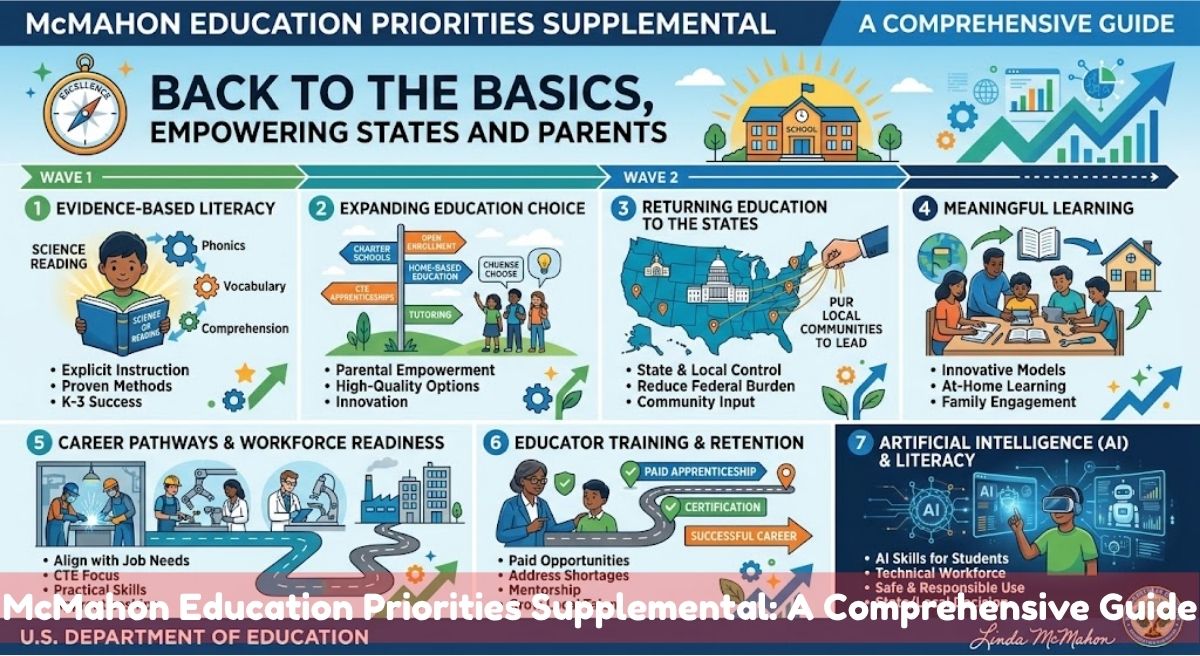
Education systems across the world are constantly evolving to meet the demands of modern society. Policies, reforms, and supplemental initiatives play a crucial role in shaping the future of students and institutions alike. One such emerging concept is mcmahon education priorities supplemental, which focuses on enhancing existing educational frameworks through targeted improvements and strategic support.
This concept emphasizes not only strengthening academic standards but also addressing gaps in accessibility, inclusivity, and innovation. By implementing supplemental priorities, educators and policymakers aim to create a more balanced and effective learning environment that caters to diverse student needs.
In this article, we will explore the meaning, significance, and impact of mcmahon education priorities supplemental, along with its key components, benefits, and future implications.
Understanding McMahon Education Priorities Supplemental
The term mcmahon education priorities supplemental refers to a structured approach that enhances primary education policies with additional focus areas. These supplemental priorities are designed to address shortcomings in traditional systems and provide solutions tailored to modern challenges.
Unlike standard educational reforms, supplemental priorities act as a support layer. They focus on improving specific aspects such as student engagement, teacher training, curriculum relevance, and technological integration.
This approach recognizes that education is not static. Instead, it evolves continuously, requiring consistent updates and enhancements. By incorporating supplemental priorities, institutions can remain adaptable and forward-thinking.
The Importance of Supplemental Education Strategies
Education systems often face limitations due to budget constraints, outdated curricula, or lack of resources. This is where supplemental strategies become essential.
The mcmahon education priorities supplemental framework provides targeted interventions that help bridge these gaps. For instance, schools can implement additional programs for underperforming students or introduce new teaching methodologies that enhance learning outcomes.
Moreover, supplemental strategies ensure that no student is left behind. They promote equity by providing extra support to disadvantaged groups, thereby creating a more inclusive educational environment.
Key Components of McMahon Education Priorities Supplemental
1. Curriculum Enhancement
One of the core elements of this framework is improving the curriculum. This includes updating course content to reflect current trends and real-world applications.
A modern curriculum should not only focus on theoretical knowledge but also emphasize practical skills, critical thinking, and problem-solving abilities.
2. Teacher Development Programs
Teachers play a pivotal role in shaping students’ futures. Supplemental priorities often include training programs that help educators adopt innovative teaching methods.
Continuous professional development ensures that teachers remain equipped with the latest tools and techniques.
3. Technological Integration
Technology has transformed the way education is delivered. Incorporating digital tools such as online learning platforms, virtual classrooms, and AI-driven resources is a key aspect of supplemental priorities.
This not only enhances accessibility but also makes learning more interactive and engaging.
4. Student Support Services
Providing additional support services is another important component. This includes counseling, mentoring, and academic assistance programs.
Such initiatives help students overcome challenges and achieve their full potential.
Benefits of McMahon Education Priorities Supplemental
Improved Learning Outcomes
By addressing specific weaknesses in the education system, supplemental priorities lead to better academic performance. Students gain a deeper understanding of subjects and develop essential skills.
Increased Accessibility
These initiatives often focus on making education more accessible to marginalized communities. This ensures equal opportunities for all students, regardless of their background.
Enhanced Teacher Effectiveness
With proper training and resources, teachers can deliver more effective lessons. This results in a more engaging and productive classroom environment.
Future-Ready Students
The integration of modern tools and updated curricula prepares students for future challenges. They become more adaptable and capable of thriving in a rapidly changing world.
Challenges in Implementation
Despite its advantages, implementing mcmahon education priorities supplemental is not without challenges.
Limited Resources
Many educational institutions struggle with funding constraints. Implementing supplemental programs requires additional financial investment, which may not always be available.
Resistance to Change
Adopting new strategies can be met with resistance from educators, administrators, or even students. Change often requires time and effort.
Lack of Training
Without proper training, teachers may find it difficult to implement new methodologies effectively. This can hinder the success of supplemental initiatives.
Strategies for Effective Implementation
To overcome these challenges, institutions can adopt several strategies:
Prioritize Key Areas
Focus on the most critical aspects that require improvement. This ensures efficient use of resources.
Provide Adequate Training
Invest in teacher training programs to ensure smooth implementation of new strategies.
Encourage Collaboration
Collaboration between educators, policymakers, and stakeholders is essential for success.
Monitor and Evaluate Progress
Regular assessment helps identify areas for improvement and ensures that goals are being met.
Role of Technology in Supplemental Education
Technology plays a central role in the success of mcmahon education priorities supplemental. From online learning platforms to AI-driven analytics, digital tools provide valuable insights and enhance the learning experience.
For example, adaptive learning systems can tailor content to individual student needs. This ensures personalized learning and better outcomes.
Additionally, technology enables remote learning, making education accessible to students in remote or underserved areas.
Impact on Students and Communities
The implementation of supplemental education priorities has a profound impact on both students and communities.
Students benefit from improved learning environments, better resources, and enhanced support systems. This leads to higher academic achievement and increased confidence.
Communities, on the other hand, benefit from a more educated population. This contributes to economic growth and social development.
Future of McMahon Education Priorities Supplemental
The future of education lies in adaptability and innovation. The mcmahon education priorities supplemental approach is expected to play a significant role in shaping modern education systems.
As technology continues to evolve, supplemental priorities will likely incorporate more advanced tools and methodologies. This includes artificial intelligence, virtual reality, and data-driven decision-making.
Furthermore, there will be a greater emphasis on lifelong learning. Education will no longer be limited to traditional classrooms but will extend to continuous skill development.
Conclusion
The concept of mcmahon education priorities supplemental represents a forward-thinking approach to education reform. By focusing on targeted improvements and supplemental strategies, it addresses the limitations of traditional systems and creates a more inclusive, effective, and future-ready educational environment.
While challenges exist, the benefits far outweigh the drawbacks. With proper implementation, collaboration, and investment, this framework has the potential to transform education systems worldwide.
Ultimately, the goal is to ensure that every student has access to quality education and the opportunity to succeed in an ever-changing world.
FAQs
What is mcmahon education priorities supplemental?
It is an approach to education reform that focuses on enhancing existing systems through targeted supplemental strategies such as curriculum updates, teacher training, and technological integration.
Why is it important?
It helps address gaps in traditional education systems, ensuring better learning outcomes, increased accessibility, and improved student support.
How does it benefit students?
Students gain access to improved resources, personalized learning experiences, and additional support services, leading to better academic performance.
What challenges are associated with it?
Common challenges include limited funding, resistance to change, and lack of proper training for educators.
How can schools implement it effectively?
Schools can prioritize key areas, invest in teacher training, encourage collaboration, and regularly monitor progress.
What role does technology play?
Technology enhances accessibility, provides personalized learning experiences, and supports data-driven decision-making.